The most innovative technology in the world can be cold. The most ambitious vision can feel distant. What makes either of them matter is people.
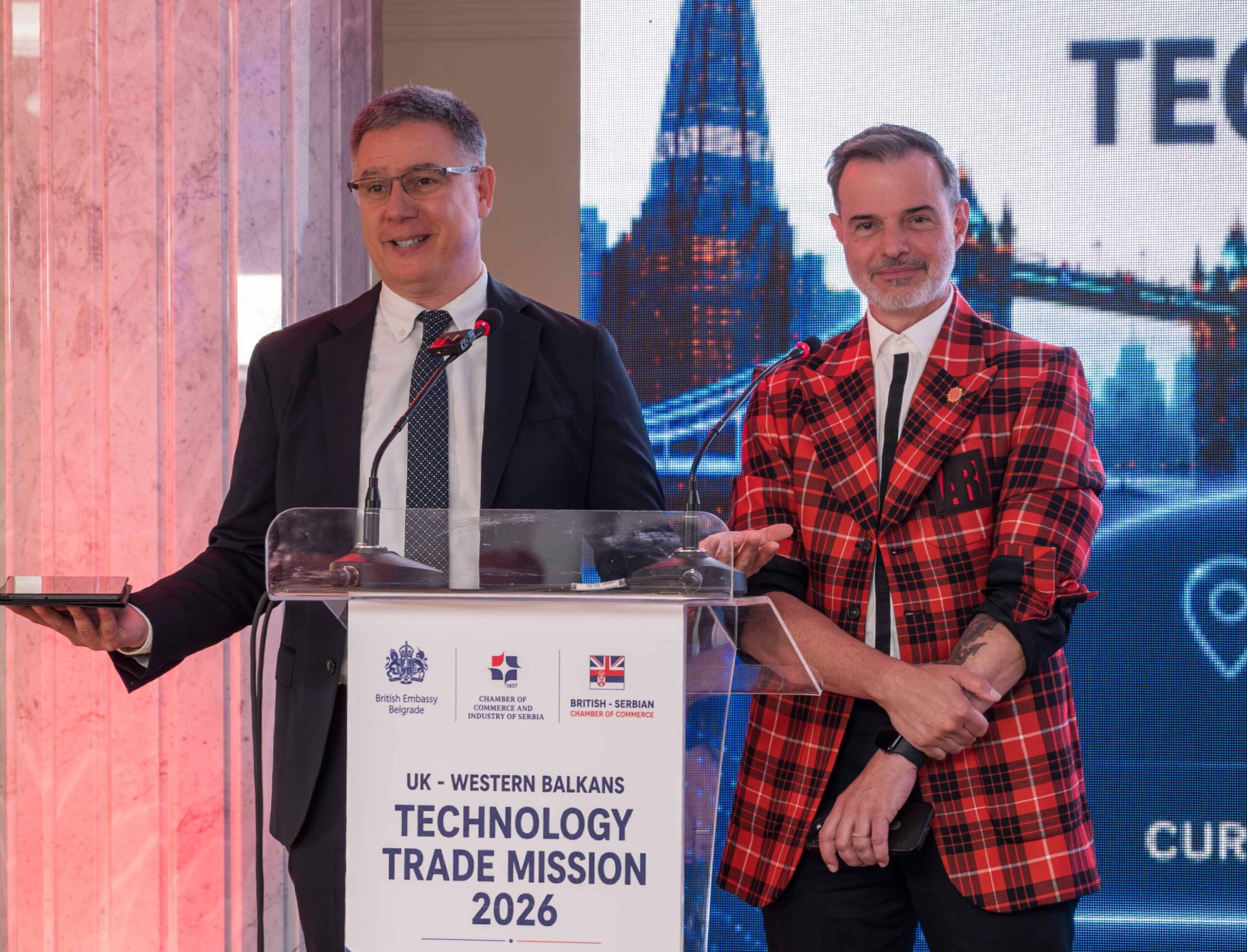
Malcolm Ché, Identity’s Head of Innovation, took that thinking to Belgrade last week. He co-hosted the UK-Western Balkans Technology Trade Mission alongside Identity COO Paul Fitzpatrick across two days of B2B meetings, a startup showcase, and direct engagement with the UK delegation.
Rather than a single keynote, Malcolm co-hosted across the sessions. Between each one he placed a short provocation — a question for the room to carry into the next conversation.
His opening, delivered as a design philosopher rather than a technologist:
“Technology reveals. It did not invent the questions we now fight over: sovereignty, ethics, bias, ownership, copyright, the value of artistic output. Those questions predate it. What technology did was widen the audience. We call technology foundational and accelerating. We watch the curve climb. But every action has an equal and opposite reaction. So if technology is the force rising, what is the force falling? What is in equal and opposite decline?”
Malcolm left it there. A provocation isn’t for resolving.
Who was in the room at the UK-Western Balkans Technology Trade Mission?
The mission ran in support of the British-Serbian Chamber of Commerce, chaired by Lord Kulveer Ranger, with Ceri Morgan, HM Trade Commissioner for Europe, also present. Cambridge showed up well: Cambridge Wireless, building Cambridge Tech Week into the most significant tech week in the UK calendar, and founders doing real work in the startup space.
Special mention to Jadranka Dervišević Kitarć, Executive Director of the BSCC, who held the whole thing together.
What Innovation means at Identity
Identity doesn’t announce innovation. It argues for it in rooms, in front of people who can fund it, partner it, or take it apart. Belgrade was exactly that.
What is the role of a technology trade mission in building international partnerships?
A technology trade mission creates the conditions for partnerships that remote engagement cannot. By placing decision-makers, founders, and government representatives in the same room — across structured B2B sessions, startup showcases, and open-format discussions — it moves conversation from possibility to commitment. The UK-Western Balkans Technology Trade Mission in Belgrade was a working example: not a conference to attend, but a room to contribute to.
For agencies and businesses operating across markets, the value is not the agenda. The value sits in the provocation held between sessions: the question a delegate carries into the next conversation that changes what they ask. That is where international partnerships get made.