As the power of the human review rises, brands that don’t see word of mouth as untapped media aren’t taking brand experience seriously enough.
Search has changed more in the past two years than in the previous 20. AI summaries have transformed our online habits. We no longer “surf” the web so much as dip a toe in it.
When Pew Research Center tracked the online behaviour of 900 US adults in 2025 it found that Google users were about half as likely to click on traditional search results featuring an AI-generated summary (8%) compared to results without an AI summary (15%). Less AI, more clicks. Go figure.
Marketers haven’t been doing themselves any favours, though. For years, anyone who wanted to rank has had to pump out gallons of blogs, listicles and how-tos, all written for algorithms instead of people. Add to that a tidal wave of slop churned out by AI in the past couple of years, and it’s little wonder so many of us have largely ditched traditional search engines for our AI chatbot of choice.
The machines are listening
But AI does search a little differently. Chatbots lean more heavily on what real people say. When Peec AI analysed 30 million sources cited by AI tools in the US earlier this year, Reddit came out top. Reviews, forums, threads, comments – the kind of stuff humans take the time to type because they either had an excellent or terrible experience. That’s what gets served back to you as an answer.
At the same time, people don’t trust the hard sell. The Ipsos Veracity Index 2025 found that while 61% of Britons trust the ordinary person in the street to tell the truth, just 6% trust the word of an influencer. So, when people want advice from someone they trust, they go to the group chat. In a US survey for Giphy last year, 85% of smartphone users said they consult their group chats before making a major life decision.
Put all of that together and you’ve got the perfect conditions for word of mouth to become one of the most powerful marketing channels. Again.
Nobody talks about your ads
There’s a delicious irony here. To take advantage of AI and what it’s done to search, we have to go back to basics. We must take brand experience seriously again. The hard truth is people aren’t talking about your ads. Except the industry. And maybe, just maybe, your Christmas ad. But what ordinary people do talk about is their experience of your brand, good and bad.
Eugene Healey defines a brand as the sum total of what people think and feel about it, and most of those thoughts and feelings come from the experience. And I mean experience in the broadest sense: events, activations, pop-ups, hospitality, customer service, your website, your shop floor, your product and how you treat your own staff.
‘I was here’ isn’t the same as ‘you should go’
Not enough brand experience is designed with talkability in mind. We brief events on footfall and dwell time, contact centres on cost per call and stores on conversion. We used to talk about social currency and making experiences envy-inducing. Somewhere along the way that got watered down to “shareable” which now means Instagrammable. But a photo that says “I was here” is not the same as saying “you should go”. Nobody’s ever gone to the pub and declared: “You’ll never guess what, I saw a really nice flower wall the other day”.
Instead, we should be asking: “What will someone say about this afterwards?” and “Who will they say it to?” If the honest answers are “nothing” and “nobody”, congratulations, you’ve just turned down a small fortune in free marketing.
Make them the hero
What makes an experience worth sharing? Usually, it’s the moment a brand does something you’d never have expected. The best stories start with “you’ll never believe what happened to me” or “I popped out for milk and came back with a birthday cake and a new zest for life”. The person telling the story is the hero, the brand is the fairy godmother, and something happened to change the hero’s perspective. They’ve seen the brand, or maybe something more profound, in a whole new light.
It cuts both ways, of course. I think we all know a bad experience travels faster than a good one. Certainly true if phone calls to my mum are anything to go by. These days it also leaves a trail for the chatbots to find.
Recommended by friends, and machines
Word of mouth now comes in two flavours. There’s the private kind: the WhatsApp message, the chat at the school gate, a recommendation from someone you trust. And there’s the public kind: the review, the Reddit thread, the authentic reel from a creator who genuinely loves the brand. That’s exactly what AI search feeds on, so every good review makes you a little more visible the next time someone asks a chatbot where to go. You need both. One gets you recommended by friends. The other gets you recommended by the machines.
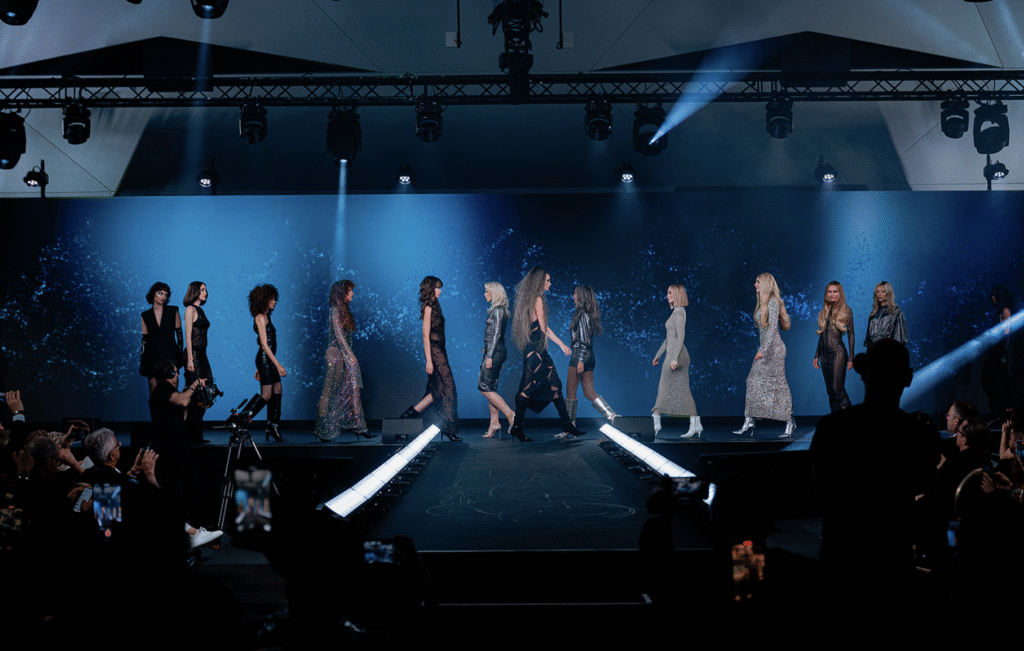
Which is why brand experience deserves more than its slot in the channel mix. It’s word-of-mouth media. In 2025, we ran a three-day community event for global beauty brand Wella and their salon professionals. Attendees had a brilliant time and raved about the products online, with posts and stories both up by more than a fifth on the previous year’s event. In earned media value, the event paid for itself.
If you cut brand experience when budgets get tight, you’re cutting valuable reach. Vanity metrics like footfall, dwell time and flower-wall selfies prove attendance. But what counts is whether anyone told a mate or a colleague it was amazing.
So, make people’s experience of your brand remarkable in the truest sense. Design it to be remarked upon. Make your brand a brilliant anecdote.