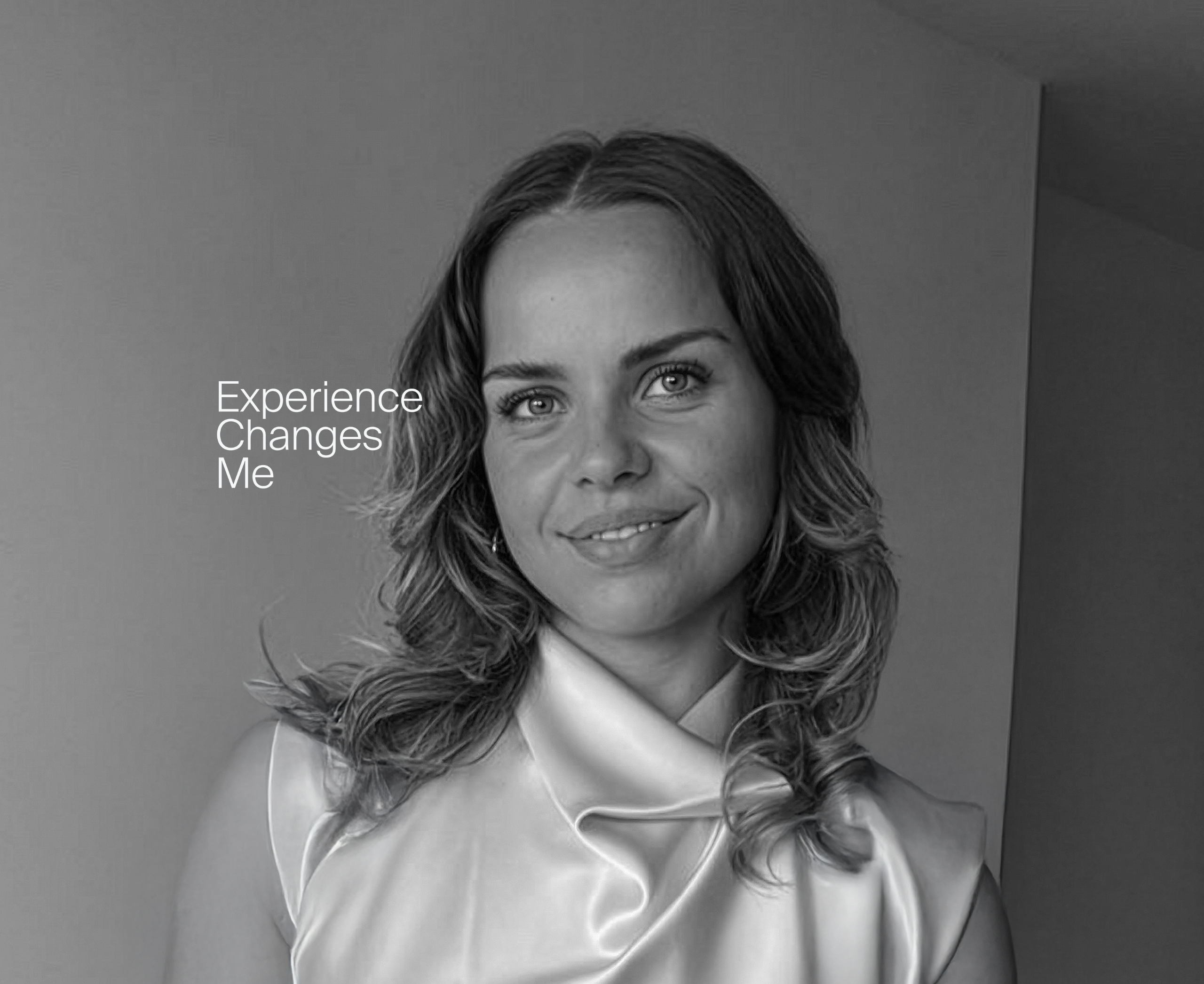
Kate O’Connor, Strategic Creative Director, explains although technology is getting smarter – it cannot replace the creative quirks only humans possess.
AI is going to change everything.
Wow, what a banal opening statement. Let me try again.
If AI’s going to change everything, we’d better appreciate pretty damn quickly that the quality of that change is going to hinge on our appreciation for the magic of the human brain.
At SXSW London, I went to a fireside chat between Matthew Freud and David Droga on what AI does and does not threaten in the creative industries, and where human value holds fast. As a creative, it lit a fire in my belly, because it made me realise that AI has made our human creativity more valuable than ever.
The thing is, AI can do incredible things when it’s executing incredible ideas. But left to its own devices, it will spit out the most likely answer. And the most likely answer is neither an act of creativity nor one of innovation. It’s an average.
The right side is still a playground and the gap is closing fast
Droga was candid. AI has already won the left brain, but the right side is still a playground. On data, logic and optimisation it’s ahead of us, and that gap is only going one way. On creativity it is, to pinch Freud’s joke, at the level of a household cat. It’s still, figuratively speaking, licking itself and seething at a can of tuna it can comprehend but not open. The two halves need each other. By definition, a model trained only on what has already happened cannot produce what has not happened yet. True originality is structurally beyond it.
And that’s where I start to worry. In a world where time is money and time is short; there’s a real risk that the age-old ‘rubbish-in-rubbish-out’ computing principle we all learned at school becomes the collective operating model. Hurried briefs and hurried people will churn out bland ideas and say they’re good enough.
But they’re not good enough. We owe our audiences more than that. We owe ourselves more than that.
Human weirdness is not a liability – it’s the whole point
For AI to enable truly compelling creative innovation, we need to give humans the space to play. To think freely. To make mistakes. To make the lateral leaps that at first glance look like a cause for concern. That’s the thing about humans; our ability to make art, or engage in ‘The Creative Process’, hinges on our human weirdness. The quirks that come with being an animated sack of meat controlled by a blob of electric jelly. The agony and the ecstasy of life. AI will never have any of those things.
Freud gave a brilliant example that illustrated this with horrifying clarity for sports fans: Why do people support a team that hasn’t won anything in 30 years? There is no rational answer. It’s loyalty, identity, community, shared suffering. AI cannot code that. It cannot model why a collective experience, even a painful one, is still more valuable than the perfectly optimised alternative. That is a deeply human thing. And it is precisely the business we are in.
Progress does not come from logic or uniformity. It comes from misinterpretation, irrelevance, absurdity, imagination, dreams. The things that make humans unpredictable. AI is on a mission to replicate the human mind, but it keeps confusing knowledge with intelligence. Knowing everything is not the same as understanding anything. And when everything is ‘best practice’ according to that knowledge, nothing is.
If AI democratises competence, sameness becomes the default and distinctiveness becomes the only real differentiator left. That is exactly where the creative offering of agencies has to play now.
AI is the multiplier, but humans are still the idea
I’m no Luddite, by the way. None of this makes me an AI sceptic. AI is a massively useful tool and I use it constantly. It can crunch the data, stress-test ideas, mock things up, version an idea a hundred ways and clear acres of grunt work off your desk. Used well, it hands back the most precious resources a creative person has – time and headspace. The very thing ‘rubbish-in-rubbish-out’ culture keeps stealing from us.
And it can help execute creative ideas amazingly. But, only when it’s in service of the idea. AI executing a brilliant idea is a multiplier. AI attempting to generate a brilliant idea is a monkey with a typewriter. Or a cat on a keyboard, lusting for tuna. The technology was never the threat. The threat is us collectively deciding the most obvious answer will do.
So, here’s where I land. Good enough has never been good enough. But now that good enough is accessible to everyone at the touch of a button, it’s worth less than it has ever been. The brands that genuinely care about their audiences are the ones who will invest in human brains. That’s still where the magic happens. And when AI has changed the world, the experiences that are made with humans at their heart will be obvious.