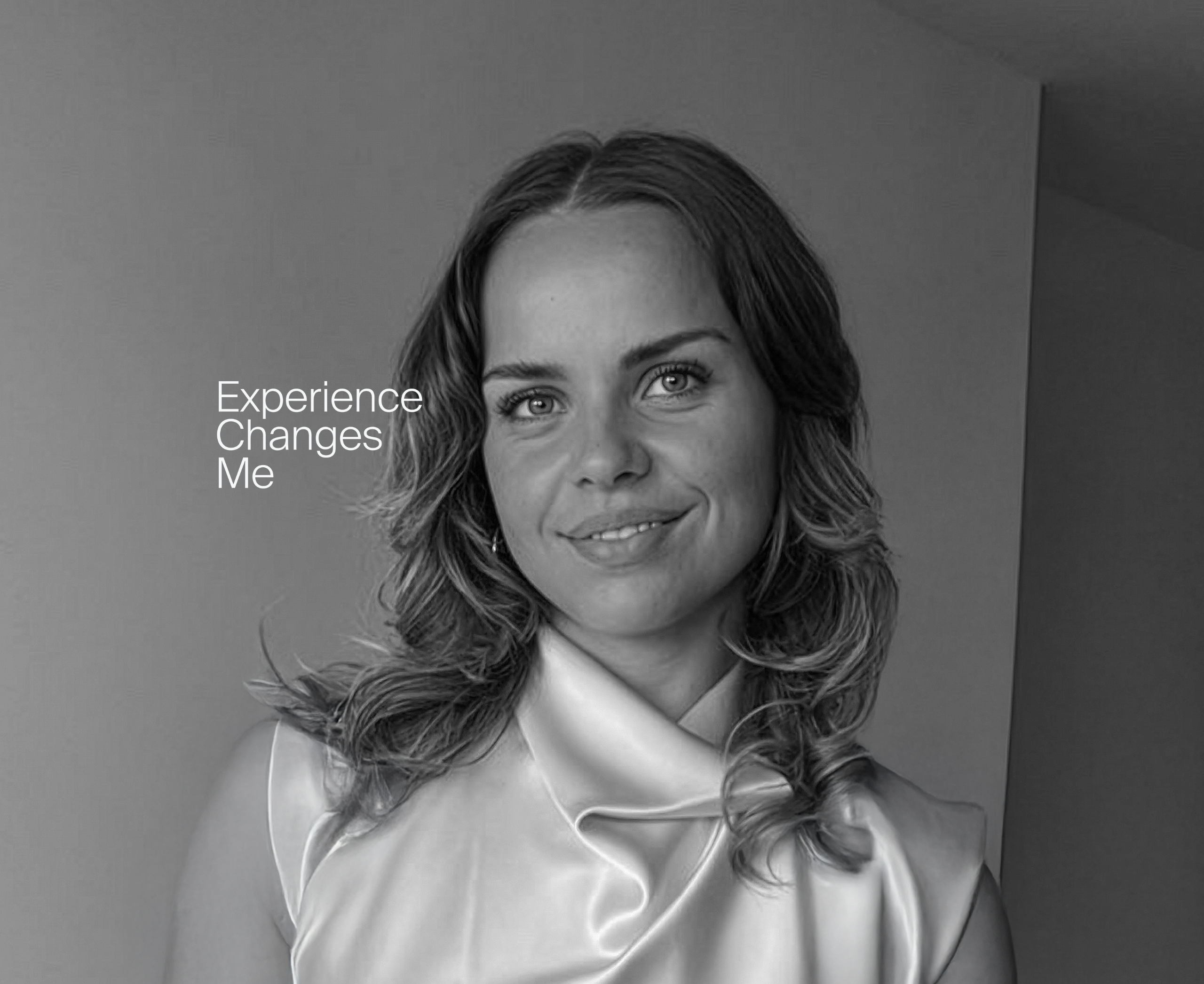
Some experiences don’t just stay with you. They change you. This is a series of personal stories from our colleagues about the moments that shifted how they think, lead, and work. Hear from our Graphic Designer, Charlie Herlihy.
Graphic Designers often spend a lot of their career making things that fit inside a frame. Like a poster on a wall, an Instagram post, a billboard. Graphic design is everywhere in smaller formats – on the side of your takeaway coffee, the packaging around your lunch, the sign pointing to the exit. Most of it lives quietly in the background of life, and that’s a vital part of great design.
That being said, the work is real, the craft matters, but you just rarely get to see how it really impacts people in real life.
What happened
Experiential design changed this for me. The first time I saw my own design stretched across a 20-metre LED wall, lit up in a darkened venue with thousands of people standing in front of it, I understood something about design I hadn’t before.
This scale really makes you realise that rules change at that size. A typeface weighting that reads beautifully at A3 can feel excessive and distracting at 20 metres. A colour palette that feels bold and vivid on a screen, can look flat under stage lighting.
The creative instincts you’ve built up over years; what feels right, what’s too heavy, what needs space – not all of them transfer the way you think they will.
What I learned
That experience made me a better designer.
It wasn’t just the technical challenge, it forced me to understand that every format of design has its own logic, physics, and emotional impact. A digital ad has milliseconds to land, a printed piece can be held, a live environment surrounds you – light, sound, crowd energy, all at once. Experiential design works in harmony with its surroundings. This means thinking beyond what something looks like and asking what it feels like to stand amongst it.
And then there’s the feedback loop, which in traditional design, you almost never get to close. Analytics, impressions, click-through rates. At an event, you’re in the room. You see the moment a crowd turns to look at something and how long they stay, you see the work doing its job in real time.
Experiential pulls design out of the background entirely. It puts it centre stage and reminds you that at its best, it isn’t there to sell to you or distract you. It’s there to make you feel something. That is how you master experiential design.
Working in this industry hasn’t made me less interested in packaging design, a well-crafted typeface, or a beautifully set grid – it’s done the opposite. Once you’ve seen what design can do at scale, you start appreciating it in all formats. Great design is everywhere, and it has been crafted perfectly for its purpose, however small.
That’s what experience changes, it doesn’t make you more critical, it makes you more curious.