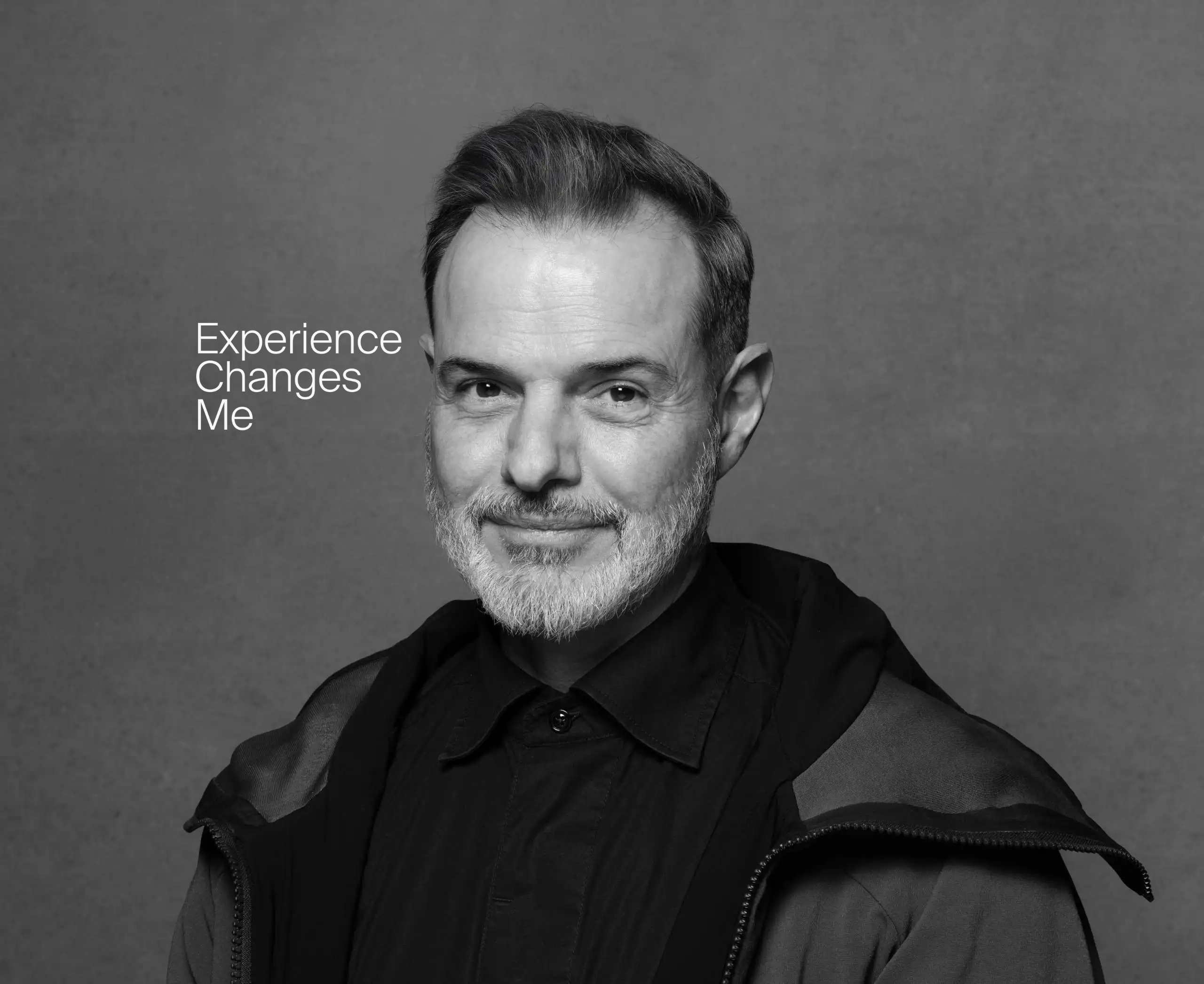
Some experiences don’t just stay with you. They change you. This is a series of personal stories from our colleagues about the moments that shifted how they think, lead, and work. Hear from our Head of Innovation, Malcolm Ché.
A few of us at Identity were sitting around one afternoon, laughing at what Google turns up when you search your own name. Old job titles, a conference bio, a photo nobody should be allowed to keep, a misspelling of my name that has outlived three employers. The usual harmless debris. Then I found something none of us had seen before.
I have no Wikipedia entry. Something had built a file on me regardless.
What happened
The entry was on Grokipedia, the AI encyclopedia xAI launched in late 2025. It looked like Wikipedia: tidy and confident, with the sourced surface of a real reference work. And some of it, I will admit, was a pleasure to read. It noted the work I care most about, the philosophical questions design keeps raising and refusing to settle, the part of my thinking I would actually want on the record. To be acknowledged for that, even by a machine, was no small thing.
Then I kept reading. It listed where I was born. It stated a detail about my family that I have never put into the public domain, and that I will not repeat here. It had gathered all of it into a few smooth paragraphs and presented the result as settled fact, in the calm authority of a reference work, as though accuracy were a closed question rather than something someone still had to earn.
That was the turn. The people I was sitting with build and interrogate these systems for a living. None of us found that detail funny.
Am I an interesting person, or am I a person of interest? The first is recognition, the kind you are glad to receive for work you believe in. The second is surveillance in the costume of a reference entry. The distinction matters, and so does the thing sitting under it: consent. Nobody asked me for any of this.
Grokipedia began with the million names that already had a Wikipedia article, the most documented people alive. I was not among them. So I was not copied across. I was compiled. The origin is on the record. xAI set its model to work through Wikipedia’s top million articles, then trawl the rest of the publicly available internet to expand on them. My entry was never in the canonical record at all. The model assembled it from whatever the internet had left lying around about me.
There was no edit button. No history showing who added what, and when. No way to issue a correction or ask for any of it to come down, short of emailing an automated Grok address that may or may not care. A version of my life now sits in public, written without me and, as far as I can tell, beyond my reach to change.
What I learned
For a while now my job has been to ask other people to take consent, provenance and accuracy seriously. I co-author the policies. I sit on an ethics committee. I advise on where these tools should and should not be pointed. I had treated those issues as governance. Then an AI system reflected my own life back at me, and those issues became personal.
The threshold for being profiled has dropped below the threshold for being known. You no longer have to be notable to be written down. You have to be a data point, and almost everyone is a data point now. A whole class of systems is moving this way: they read the open web and produce confident accounts of people who never volunteered to be accounted for.
It changed how I read our own work. At Identity we use AI across creative and production, and the questions we ask before pointing any of it at an audience’s data, where it came from, whether anyone agreed to it, whether we can stand behind what it claims, are what separate something useful from something extractive. I had made that case in the abstract. Now I have been on the other end of it.
I grew up in South Africa. You learn early to distrust any source that announces it is telling you the whole truth, because someone has always decided what the whole truth is permitted to be. Grokipedia’s stated mission is the truth, the whole truth and nothing but the truth. I have heard that confidence before, and it has never been the part worth trusting. Where I am from you also learn a quieter question to ask of anything new: who is it built to serve, and who does it only watch.
None of this makes the technology go away, and I would not want it to. The work is deciding what we let these systems assemble about people, and holding them to account when they are wrong about someone and sound entirely certain of it.
Experience changes everything. Including who gets to decide you are a person of interest, and whether anyone is checking.