Webflow Conf 2026
A brand repositioning delegates could walk through
Webflow was mid-repositioning from a no-code design tool to what it now calls an agentic web marketing platform. Webflow Conf 2026 was the first time that shift needed to show up physically. Identity was the brand experience agency Webflow appointed to make that shift visible across the conference.
The challenge
The audience made the stakes higher: designers and creative directors, people who notice a generic brand experience the moment they walk into it. Webflow wanted a conference brand experience for an audience of critics
Creative bold enough to be talked about outside the software world
The brief spanned five floors of the Omni Boston Hotel at the Seaport, for delegates in the room and thousands watching online. Webflow had run the conference design in-house until now, but brought in an outside agency to lead creative direction for the first time.
The brief grew
The brief started narrower, focused on creative strategy and innovation consultancy, but as the ideas took shape and ambition grew, it expanded into full creative direction across the event. Identity was appointed in full, bringing its strategy, creative and innovation teams to work alongside Webflow’s in-house design teams and other support agencies.
Scale was one constraint
Translating an abstract brand repositioning into something a room of qualified critics could walk through and feel, live, over three days, with no room for a soft launch, was the harder one.
The approach
The starting insight was about the audience. Webflow Conf attendees sit at the intersection of design and code, and they measure event experience against culture at large: music, art, fashion, sport. Identity benchmarked against SXSW, Sundance, Frieze, Sónar+D and the Whitney Biennial.
From there, Identity mapped four cultural signals shaping 2026:
Joy and surreal humour; a rebellion against over-polished aesthetics toward raw, hand-made work; here-ness, a pull back to physical, sensory, location-rooted experience; and voice, typography reclaiming its place as statement rather than signage.
Those four signals resolved into one idea
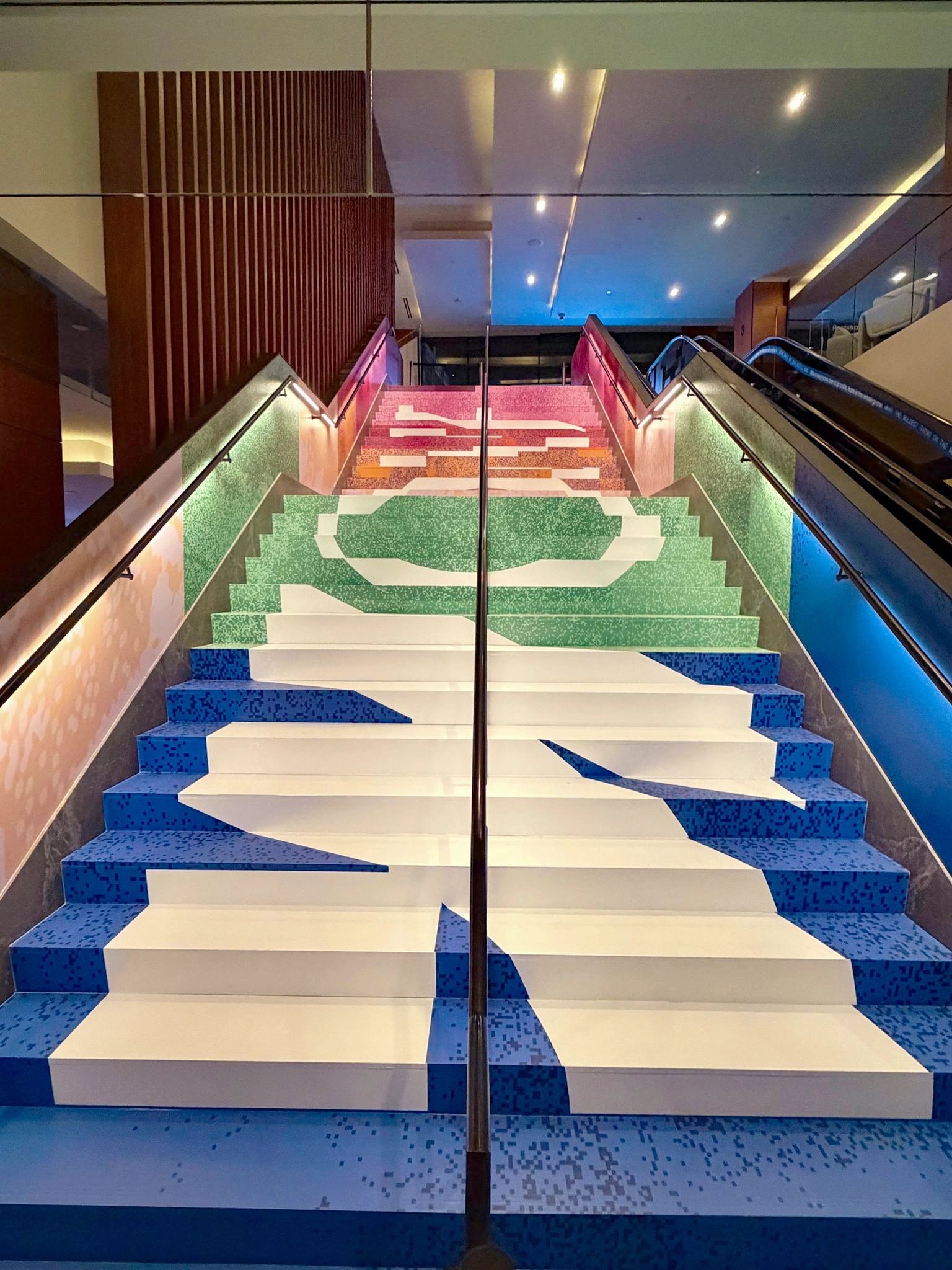
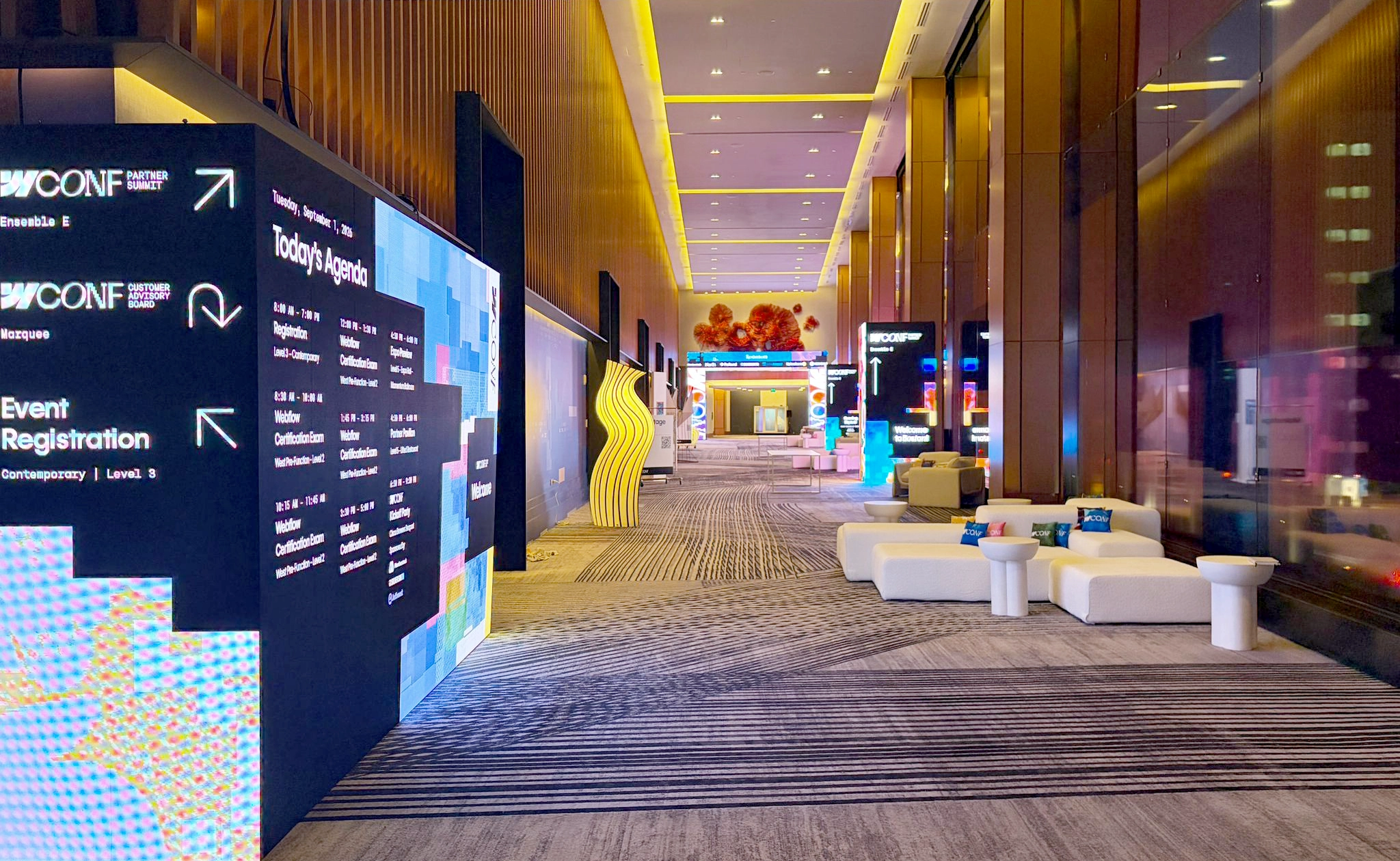
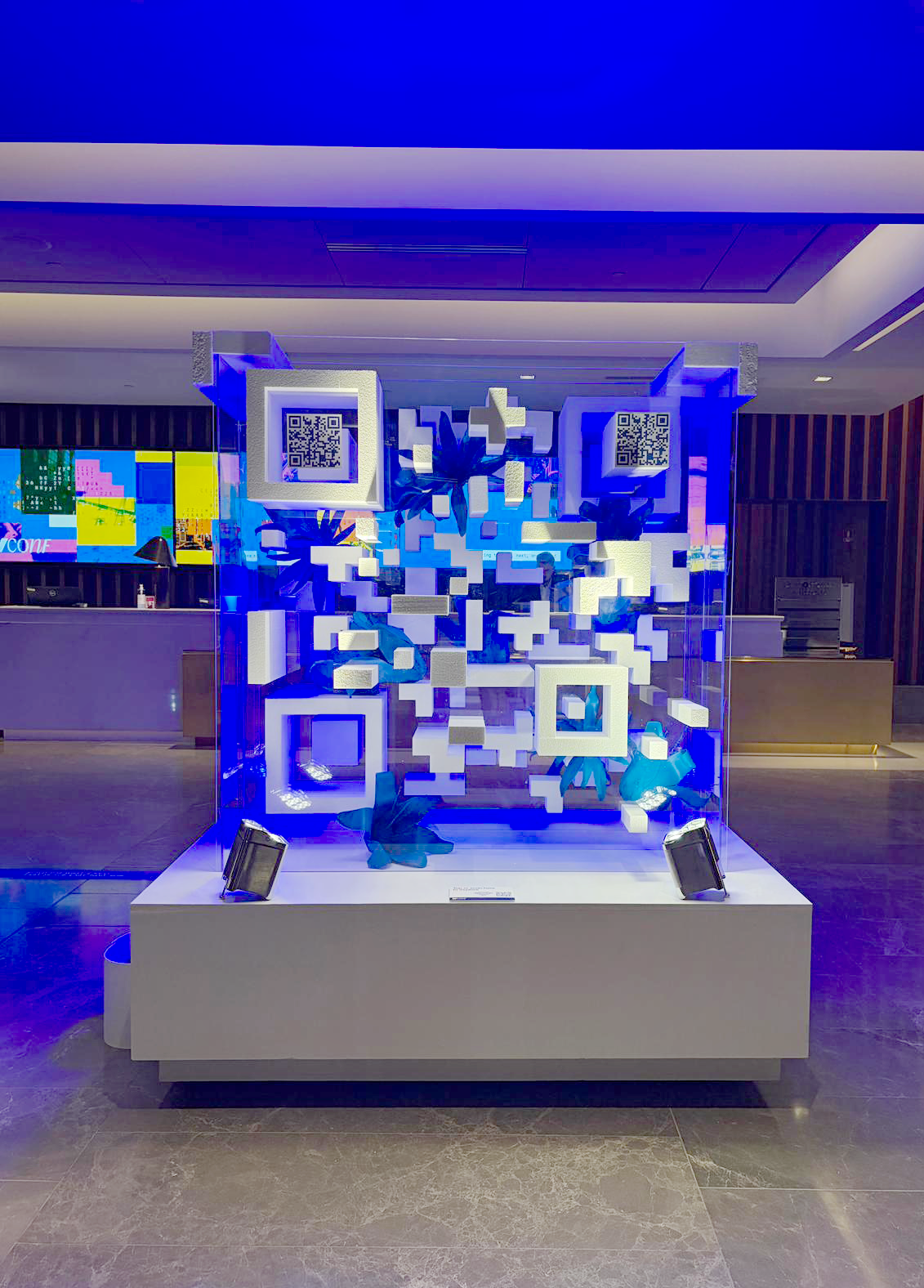
Digital/Tangible, the space where Webflow’s product work meets its physical expression. That idea was built across all five floors of the Omni, each with its own design and experience language, so the venue itself became part of the identity:
- 3D anamorphic QR sculpture fusing physical and digital
- A pixel line degrading down the escalator
- Colour-fractured glass
- Black-and-white typographic statements
- A sequential lift-door message leading guests to Floor 5
The result
The clearest signal came from the audience the brief was written for. Unprompted, creatives, designers and marketers kept describing how the space transformed floor by floor, and a sense of liminality, caught between the physical and the digital.
For a room of people who judge experience design for a living, that reaction is the real test. It told Webflow the repositioning had landed physically and gave its team proof that outside creative direction had taken Webflow Conf further than the in-house team could take it alone.
It ended the question of whether an outside agency belonged in the room and opened a new one: what Identity does next for Webflow.
Related work



Experience
Changes
Everything
We want to hear what matters most to you.